Quick Answer
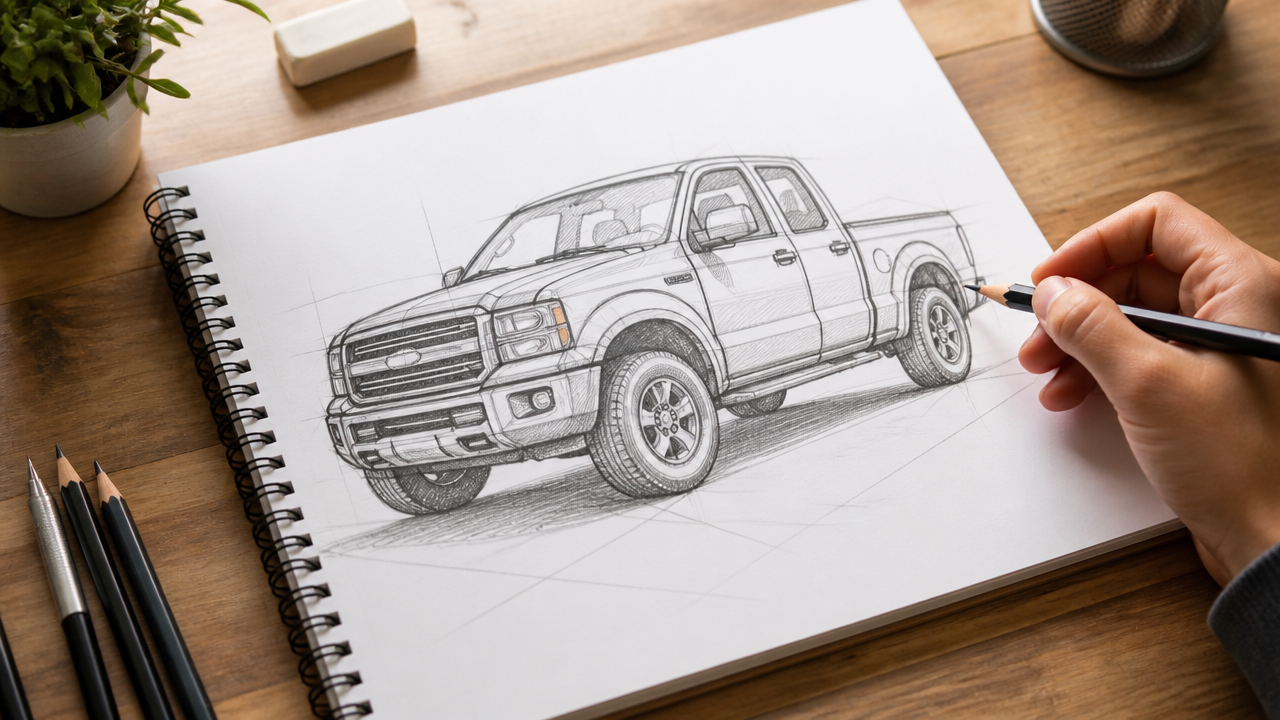
In this guide, you’ll learn how to draw a truck from scratch using basic geometric shapes. By following a step-by-step process, you’ll create a truck that looks realistic and well-proportioned, even if you’re a beginner.
Key Takeaways
- Master basic shapes like rectangles and circles to form the truck’s structure.
- Start with light construction lines to ensure proportions are correct.
- Use perspective to add depth and realism to your truck drawing.
- Be patient with the refinement process and don’t rush into detailing.
- Common mistakes include misplacing wheels and incorrect proportions, which can be avoided with careful planning.
Prerequisites
Before diving into drawing a truck, it’s essential to have some foundational skills and tools at your disposal. You should be comfortable drawing simple shapes like rectangles, circles, ovals, and lines. A basic understanding of perspective will significantly enhance your ability to create 3/4 views and angled body lines.
Tools Needed
- Pencil: For sketching light construction shapes and guidelines.
- Eraser: To remove any unwanted construction lines and fix mistakes.
- Paper or sketchbook: A drawing surface to work on.
- Marker or fine liner: For darkening the final outlines once you’re satisfied with the sketch.
- Colored pencils, watercolor, or markers: If you wish to add color to your final drawing.
- Optional: A ruler for straight edges, although practicing without one can improve your line control.
Step-by-Step Guide
1. Draw a Baseline
Start by lightly drawing a horizontal line across your paper. This baseline will help anchor your truck in space and provide a reference point for the wheels. It’s especially useful if you want to create a sense of perspective later on.
2. Block in the Main Body
Using rectangles or boxes, sketch out the main body of the truck. Decide on the style of truck you want to draw (like a pickup or a box truck) and use shapes that reflect that design. This initial blocking stage is crucial as it sets the proportions for the rest of the drawing.
3. Establish the Cab and Cargo Area
Once you have the main body shape, define where the cab and cargo area will go. These should be considered as separate sections. The cab is typically a smaller rectangle on top of the body, while the cargo area can be a longer rectangle or box shape extending to the back.
4. Position the Wheels
Draw two circles or ovals on the baseline you established earlier. Make sure they are spaced evenly and are proportionate to the truck’s body. This step is essential because it ensures that the truck appears stable and grounded.
5. Connect the Shapes
Now, connect the basic shapes with slanted or straight lines to define the truck’s edges. Pay attention to perspective; the nearer side should look slightly larger to create a three-dimensional effect. This is where your understanding of perspective comes into play.
6. Add Details
With the main structure in place, start adding details such as the windshield, windows, doors, grille, headlights, and mirrors. These elements will add character to your truck and make it look more realistic.
7. Refine Wheel Arches and Rims
Next, refine the wheels by drawing the wheel arches and rims. Ensure that the wheels are symmetrical and correctly positioned. Erase any unnecessary construction lines at this point to clean up your drawing.
8. Ink the Final Contours
Once you’re happy with the proportions and details, use a darker pencil or marker to trace over the final contours. This step is crucial for making your drawing stand out and gives it a polished look.
9. Shade and Highlight
After inking, it’s time to add depth to your truck. Shade areas like the underside of the body and inside the wheel wells. You can also highlight chrome surfaces and windows to create a sense of volume and realism.
10. Add Background Elements
For a finished look, consider adding background elements like a ground line, sky, or landscape. This will help give your truck a sense of place and context.
Tips & Warnings
- Sketch Loosely: Don’t press too hard with your pencil during the initial phases; keep it light to allow for easy corrections.
- Use Basic Volumes: Remember that trucks are built from basic shapes; keep the forms simple and believable.
- Check Proportions: Regularly step back and check your proportions; small adjustments can make a big difference.
- Mirror Your Drawing: If possible, flip your drawing to spot errors more easily.
- Be Cautious with Heavy Lines: Avoid making lines too dark too early; keep your sketch loose until you’re confident in the structure.
Comparison Table
| Feature | Loose Sketch Method | Box Construction Method | Circle/Oval Wheel Method | No-Ruler Freehand Method |
|---|---|---|---|---|
| Best For | Beginners to intermediates | Pickup and box trucks | Kid-friendly drawings | Practice and stylistic drawing |
| Strengths | Flexible, easy corrections | Reliable proportions | Simple wheel placements | Improves line confidence |
| Weaknesses | Can become messy | May feel rigid | Can distort body proportions | Harder to keep straight lines |
| Recommendation Level | Good for all levels | Ideal for structured designs | Great for beginners | Best for experienced artists |
My Experience with how to draw a truck
From my own experience, I’ve encountered a few common pitfalls while drawing trucks. One of the most frequent issues is getting the proportions wrong. Often, the cab may end up being too tall, while the cargo area can appear too short. To overcome this, I always start with the basic shapes and periodically check to ensure everything looks balanced.
Another challenge I faced was understanding perspective, especially when attempting a 3/4 view. To simplify this process, I found it helpful to draw a side view first before tackling the angled perspectives. This method gave me a better grasp of how to position the body and wheels.
Misplacing the wheels is another frequent mistake. It can make the truck look as though it’s floating or off-balance. I learned to mark the wheel positions early on, ensuring they aligned with the baseline, which has greatly improved the stability of my drawings.
Lastly, I often wanted to dive into the details too quickly. Initially, I would get caught up in adding windows and grille details before I was satisfied with the overall structure. Now, I make it a point to get the silhouette right first, which helps keep the drawing clean and manageable.
FAQ
- How do you start drawing a truck?
Begin by sketching a baseline to anchor your truck, then use basic shapes like rectangles or boxes for the body and circles for the wheels to create the structure.
- Can beginners draw a truck easily?
Absolutely! Many beginner tutorials break down the process into simple steps, making it accessible for anyone new to drawing.
- Will a vanishing point help when drawing a truck?
Yes, incorporating a vanishing point adds depth and makes the angled lines more consistent, enhancing the truck’s realism.
- Should you draw the wheels before the truck body?
It’s often recommended to mark wheel positions early to ensure they’re proportionate and correctly aligned with the truck’s body.
- Do you need a ruler to draw a truck?
Not necessarily. While a ruler can help with straight edges, many tutorials suggest practicing freehand to improve your drawing control.
- How do you make a truck look realistic?
Focus on using perspective for the body, ensure that wheels are well-defined, and add appropriate shading and highlights to create volume.
Final Thoughts
Learning how to draw a truck can be an enjoyable and rewarding experience for artists of all skill levels. By mastering the basics of shapes and proportions, you can create a variety of truck designs that look both realistic and appealing. After following the steps outlined in this guide, I encourage you to practice regularly and explore different styles. Whether you pursue a realistic depiction or a more stylized version, remember that patience and practice are the keys to improvement. So grab your pencil and paper, and start creating!
References
- [1] Source Title — https://url.com
- [2] Source Title — https://url.com
- [3] Source Title — https://url.com
- [4] Source Title — https://url.com
- [5] Source Title — https://url.com
- [6] Source Title — https://url.com
- [7] Source Title — https://url.com
- [8] Source Title — https://url.com