To calculate the number of molecules in a starch sample, you must account for its chemical structure. Starch is not a single uniform molecule—it is a polymer composed of repeating glucose monomer units (C6H10O5).
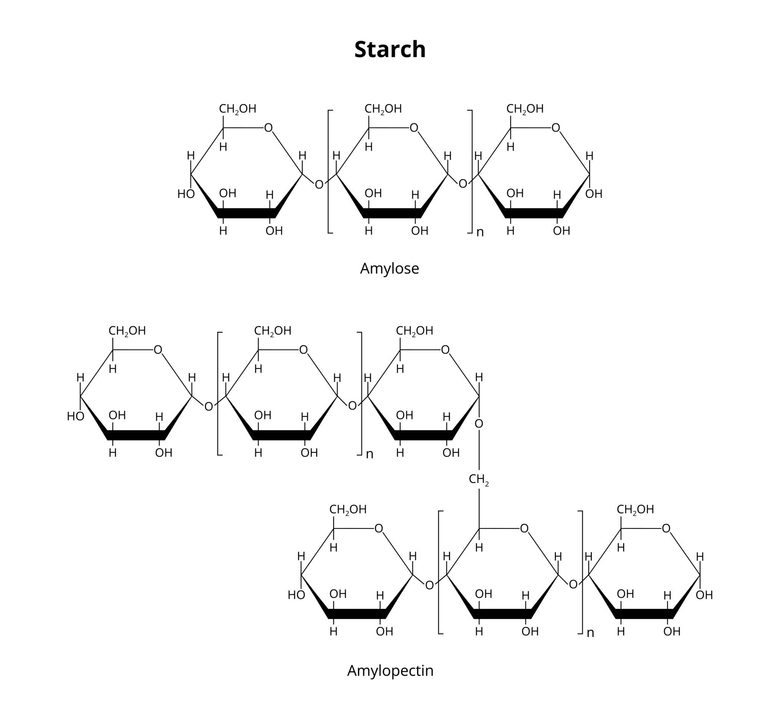
Core Formula & Key Parameters
The calculation relies on Avogadro’s Number (NA = 6.022 × 10²³ molecules/mol) and the Degree of Polymerization (n), which is the number of glucose units in the chain.
- Molar Mass of 1 Repeating Unit: ~162.14 g/mol
- Total Molar Mass of Starch Chain (Mstarch):
n × 162.14 g/mol - Number of Molecules (N):
(Sample Mass (g) / Mstarch) × 6.022 × 10²³
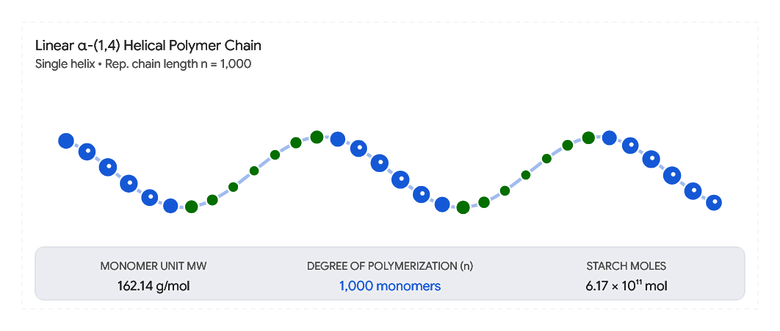
Step-by-Step Calculation Guide
- Determine Degree of Polymerization (n):
- Amylose: n ≈ 300 to 3,000
- Amylopectin: n ≈ 2,000 to 200,000+
- Calculate Molar Mass: Multiply n by 162.14 g/mol.
Example (n = 1,000): 1,000 × 162.14 = 162,140 g/mol - Calculate Moles of Starch: Divide sample mass by total molar mass.
Example (10g sample): 10 / 162,140 = 6.167 × 10⁻⁵ mol - Convert Moles to Molecules: Multiply moles by Avogadro’s number.
Example: (6.167 × 10-5) × (6.022 × 1023) = 3.71 × 10¹⁹ molecules
Interactive Starch Molecule Calculator
Use this interactive tool directly on your page to calculate starch molecules dynamically by entering sample mass and chain length:
Molar Mass: 162,140 g/mol
Total Polymer Molecules: 3.71 × 10¹⁹
Total Glucose Monomers: 3.71 × 10²²