How to Read a Person: Understanding Nonverbal Cues and Communication
In an increasingly interconnected world, the ability to understand others deeply is an invaluable skill. Beyond spoken words, a wealth of information is conveyed through nonverbal cues, offering insights into emotions, intentions, and underlying thoughts. Learning “how to read a person” involves developing a keen awareness of these often subtle signals, allowing for more effective communication, stronger relationships, and better navigation of social and professional environments. This article explores key aspects of nonverbal communication, providing practical strategies to enhance your observational skills and deepen your understanding of those around you.
The Foundations of Nonverbal Communication
Nonverbal communication encompasses all the ways we communicate without using words. It includes everything from facial expressions and body language to tone of voice and even the way we dress. Experts suggest that a significant portion of our communication, some estimates placing it as high as 70-93%, is nonverbal. This makes understanding these cues not just helpful, but essential for truly grasping what another person is conveying.
These silent signals often reveal more authentic information than spoken words because they are frequently unconscious reactions. While someone might carefully choose their words, their body language or facial microexpressions can betray their true feelings. Developing the ability to interpret these signals requires practice and an understanding of the various categories of nonverbal communication. It’s not about mind-reading, but rather about attentive observation and pattern recognition.
Key categories of nonverbal communication include:
- Kinesics: The study of body movements, gestures, posture, and facial expressions.
- Proxemics: The study of personal space and how its use impacts communication.
- Haptics: The study of touch in communication.
- Paralanguage: Vocal cues that aren’t words, such as tone, pitch, volume, rate of speech, and pauses.
- Oculesics: The study of eye contact and eye movement.
- Chronemics: The study of how time is used and perceived in communication.
Decoding Body Language

Body language is perhaps the most widely recognized aspect of nonverbal communication. It provides a rich tapestry of signals that can indicate comfort, discomfort, openness, defensiveness, confidence, or insecurity. When observing body language, it’s crucial to look for clusters of signals rather than isolating a single gesture, as individual cues can sometimes be misleading or culturally specific.
Common body language indicators include:
- Posture: An open posture (uncrossed arms, relaxed stance) often signifies openness and receptiveness, while a closed posture (crossed arms, hunched shoulders) can suggest defensiveness, discomfort, or disinterest.
- Gestures: Hand and arm movements can emphasize points, express enthusiasm, or reveal anxiety (e.g., fidgeting, self-touching). Observe how gestures align with spoken words.
- Orientation: The direction a person’s body is facing can indicate their level of engagement. Facing someone directly often shows interest, while angling away might suggest disengagement or a desire to leave.
- Legs and Feet: Often overlooked, the lower body can be quite telling. Tapping feet might indicate impatience or anxiety, while feet pointed towards an exit could signal a desire to disengage.
Interpreting body language effectively requires context. For example, crossed arms in a warm room might simply indicate a desire to be comfortable, not necessarily defensiveness. Always consider the environment, the topic of conversation, and the individual’s typical behavior before drawing conclusions.
Interpreting Facial Expressions and Eye Contact

The human face is incredibly expressive, capable of conveying a vast range of emotions, often in mere milliseconds. Facial expressions are considered a universal language, with certain basic emotions—happiness, sadness, anger, fear, surprise, and disgust—recognized across cultures. However, the intensity and display rules for these expressions can vary significantly.
When observing facial expressions, pay attention to:
- Microexpressions: These are brief, involuntary facial expressions that flash across a person’s face for a fraction of a second, revealing their true emotions before they can be consciously controlled.
- Overall Expression: Is the face relaxed or tense? Are the brows furrowed or smooth? Is there a genuine smile (involving the eyes) or just a polite one?
- Asymmetry: Sometimes, an expression might appear stronger on one side of the face than the other, which can be an indicator of a contrived or insincere emotion.
Eye contact is another powerful nonverbal cue. It can signal interest, engagement, honesty, or even aggression, depending on the duration and intensity. Too little eye contact might suggest shyness, dishonesty, or disinterest, while an overly intense stare can be perceived as intimidating or confrontational. A comfortable level of eye contact, typically intermittent and sustained for a few seconds at a time, often indicates attentiveness and sincerity.
Observe not just whether someone makes eye contact, but also how they do it. Do their eyes dart around? Do they look away frequently? Do their pupils dilate (a sign of interest or arousal)? These subtle cues can offer profound insights into a person’s inner state.
Understanding Vocal Cues (Paralanguage)

While not words themselves, the characteristics of a person’s voice—known as paralanguage—speak volumes. How something is said can be just as important, if not more so, than what is said. Paralanguage provides context and emotional coloring to spoken communication, helping you discern sincerity, confidence, nervousness, or excitement.
Key vocal cues to consider include:
- Tone of Voice: Is it warm, cold, sarcastic, friendly, or aggressive? Tone can completely alter the meaning of a sentence.
- Pitch: A higher pitch can indicate excitement, anxiety, or questions, while a lower pitch often conveys seriousness, authority, or calmness.
- Volume: Loudness can suggest anger, enthusiasm, or confidence. Softness might indicate shyness, uncertainty, or an attempt to be discreet.
- Rate of Speech: Speaking quickly can signal excitement, nervousness, or a desire to get a point across. Speaking slowly might suggest thoughtfulness, emphasis, or even boredom.
- Pauses and Silences: Strategic pauses can add emphasis, but frequent or prolonged silences can indicate discomfort, hesitation, or a need to gather thoughts.
- Vocalizations: Non-word sounds like “um,” “uh,” sighs, yawns, or laughs also fall under paralanguage and can convey various messages, from agreement to impatience.
When someone’s words contradict their vocal cues, it’s often the paralanguage that reveals the true message. For instance, someone saying “I’m fine” in a flat, monotone voice with a sigh is likely expressing something other than genuine well-being.
The Importance of Context and Baseline Behavior
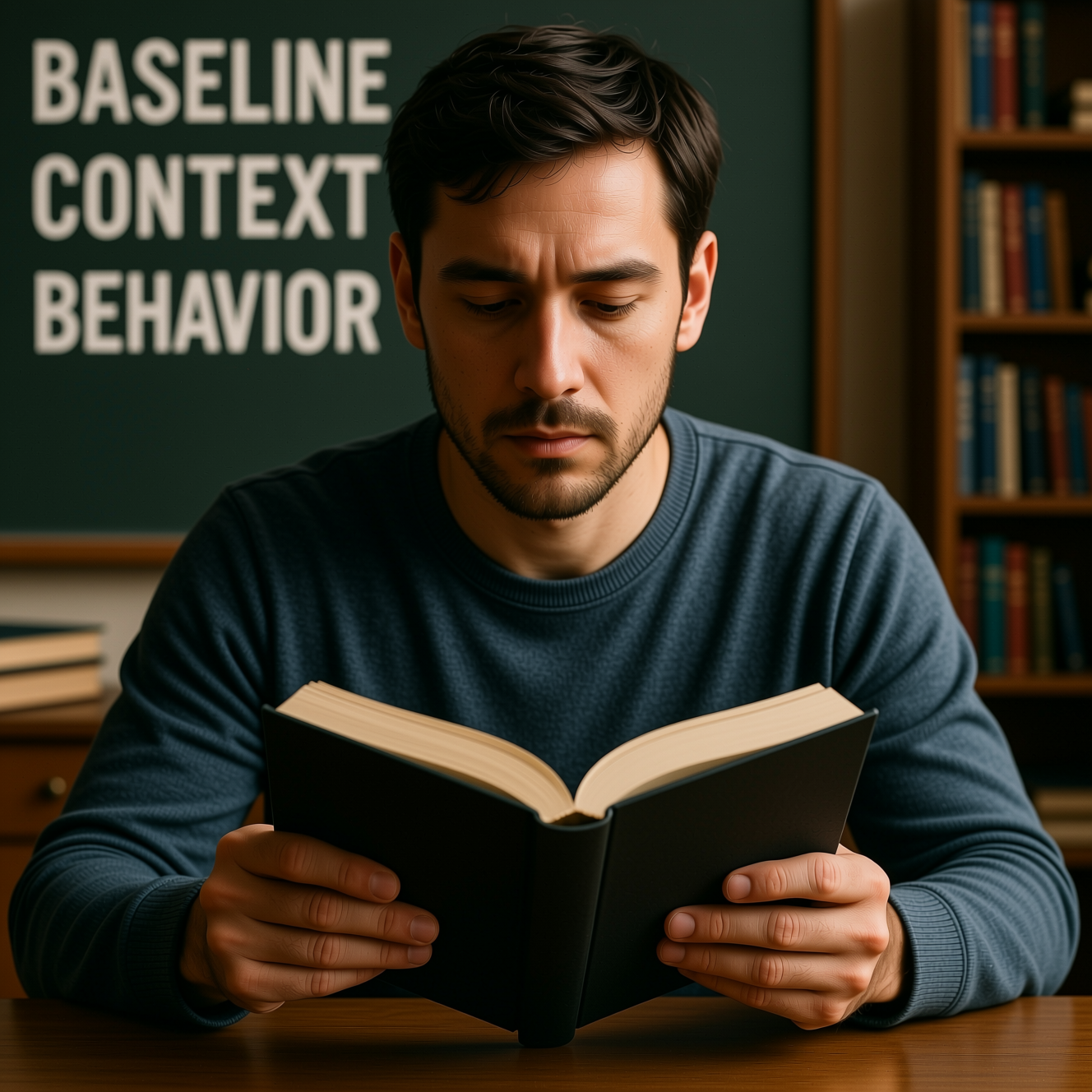
To accurately “read a person,” it is absolutely vital to consider context and establish a baseline for their typical behavior. Misinterpretations often arise when cues are taken out of their surrounding circumstances or when an individual’s unique communication style isn’t accounted for. What might be a sign of nervousness in one person could be their normal demeanor in another.
Contextual Considerations:
- Environment: A person might cross their arms because it’s cold, not because they’re defensive. Someone might speak softly in a library, not necessarily out of shyness. Always assess how the physical and social environment might be influencing nonverbal signals.
- Culture: Nonverbal cues are not universally interpreted. What is polite in one culture (e.g., direct eye contact) might be considered rude in another. Be mindful of cultural differences, especially in diverse settings.
- Relationship: The way someone communicates nonverbally with a close friend will differ from how they interact with a boss or a stranger. Your existing relationship with the person provides crucial context.
- Situation: Is the person under pressure? Are they discussing a sensitive topic? The nature of the situation will heavily influence their nonverbal expressions.
Establishing a Baseline:
Before you can identify deviations, you need to understand what constitutes “normal” for that individual. Observe them in various relaxed and neutral settings. How do they typically sit? What is their usual speaking pace? How much eye contact do they generally make? Once you have a sense of their baseline, you can more accurately spot changes in their nonverbal behavior that might signal a shift in emotion, thought, or intention.
Reading people is not about making snap judgments based on a single cue. It’s about combining careful observation of multiple nonverbal signals with a deep understanding of the context and the individual’s typical patterns. With practice, this skill can significantly enhance your ability to connect with and understand others.
Conclusion

The ability to read a person effectively is a powerful tool for navigating the complexities of human interaction. By diligently observing body language, interpreting facial expressions and eye contact, understanding vocal cues, and always considering context and individual baselines, you can unlock a deeper level of insight into others’ thoughts and feelings. This enhanced understanding fosters empathy, improves communication, and strengthens relationships in all aspects of life, from personal connections to professional endeavors. Begin practicing these observational skills today, and you’ll soon find yourself more attuned to the unspoken messages that shape our world.